

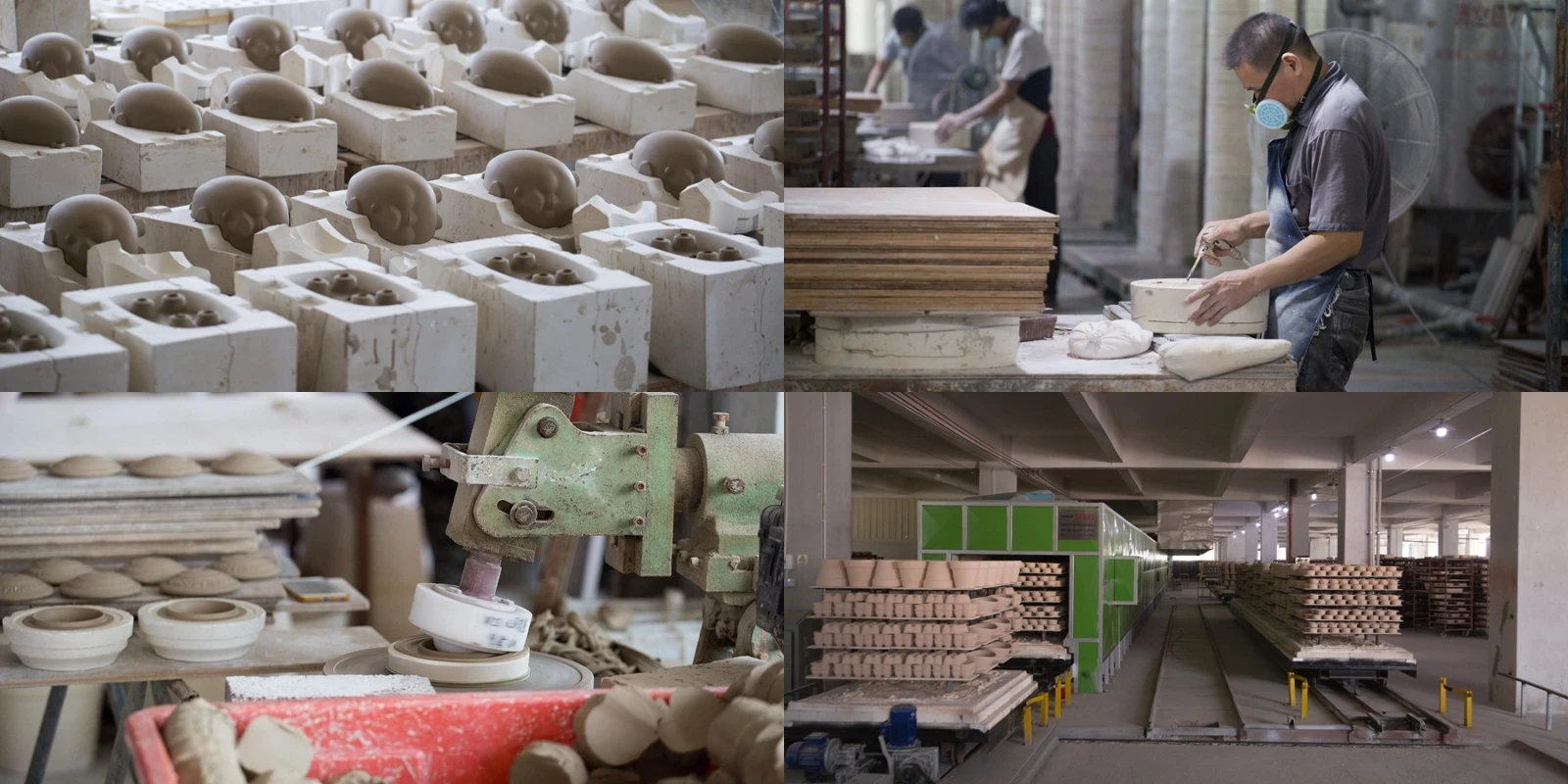
In der internationalen Keramikindustrie ist China sicherlich einer der größten Hersteller. Von Geschirr bis zu Zierkeramik, von Hotelkeramik bis zu Sanitärkeramik und Baukeramik, Chinesische Hersteller mit einer vollständigen industriellen Kette und wettbewerbsfähigen Kosten sind die besten Partner für weltweite Käufer geworden.
Aber mit der Verbreitung von mehr oder weniger kompetenten Fabriken ist die Wahl eines vertrauenswürdigen Keramikherstellers jetzt eine wichtige Angelegenheit für Käufer, Markeninhaber und Großhändler in Übersee.
Der Artikel bietet eine umfassende Untersuchung der Schlüsselaspekte Produktionskapazität, Zertifizierung, Qualitätskontrolle, Design- und F&E-Kapazitäten, Service- und Lieferkapazitäten sowie Unternehmensintegrität, so dass Käufer beurteilen können, ob ein Keramikhersteller ist für langfristige Geschäfte geeignet.
Die Klärung Ihrer eigenen Bedürfnisse ist der erste Schritt bei der Auswahl eines Keramikherstellers
Bevor man sich auf die Suche nach einer Keramikfabrik begibt, muss man zunächst die eigenen Bedürfnisse klären, sonst wählt man leicht den falschen Partner.
Wir empfehlen, zunächst die folgenden sechs Punkte zu ermitteln:
- Produkttyp: Keramik für den täglichen Gebrauch / Hotelkeramik / Badezimmerkeramik / Baukeramik / Kunstkeramik
- Materialanforderungen: Verstärktes Porzellan, Knochenporzellan, Hochtemperaturporzellan, Quarzporzellan, Unterglasur, Inglasur, Überglasur
- Anpassungsbedürfnisse: OEM/ODM erforderlich, Logo-Anpassung, Entwicklung von Formen
- Zielmarkt-Zertifizierungen: Wie FDA, LFGB, ISO, CE, Prop 65, BSCI
- MOQ (Mindestbestellmenge) und Einheitspreisbereich
- Anforderungen an Verpackung, Transport und Lieferzeiten
Nur wenn Sie Ihre eigene Positionierung klar definieren, können spätere Auswertungen effizienter sein.
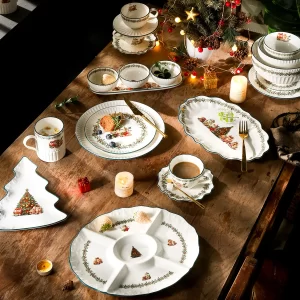
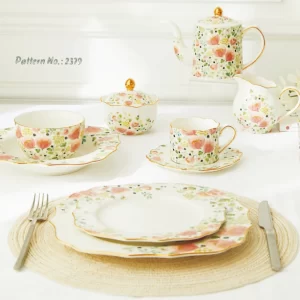
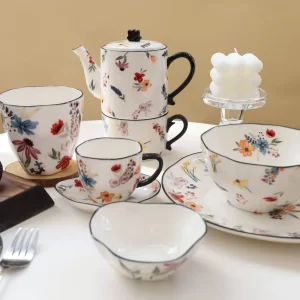
Verwandte Produkte

Bewertung von Herstellerqualifikationen: Wesentliche Bedingungen für eine zuverlässige Keramikfabrik
Zuverlässige Keramikhersteller verfügen oft über umfassendere Unternehmensqualifikationen, Qualitätssysteme und Exporterfahrungen. Diese Informationen können öffentlich überprüft werden.
- Zulassungsvoraussetzungen und legaler Betriebsstatus
- Ist das Unternehmen rechtmäßig eingetragen?
- Ist das Unternehmen seit mindestens 5 Jahren in Betrieb?
- Verfügt das Unternehmen über Außenhandelsrechte?
- Gibt es Risikoaufzeichnungen, betriebliche Unregelmäßigkeiten oder Gerichtsverfahren?
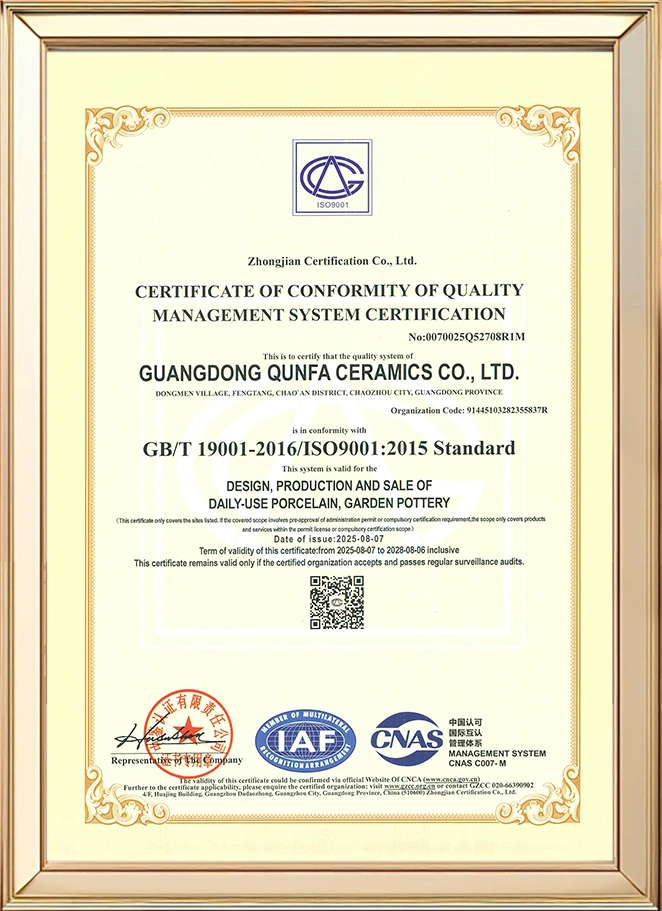
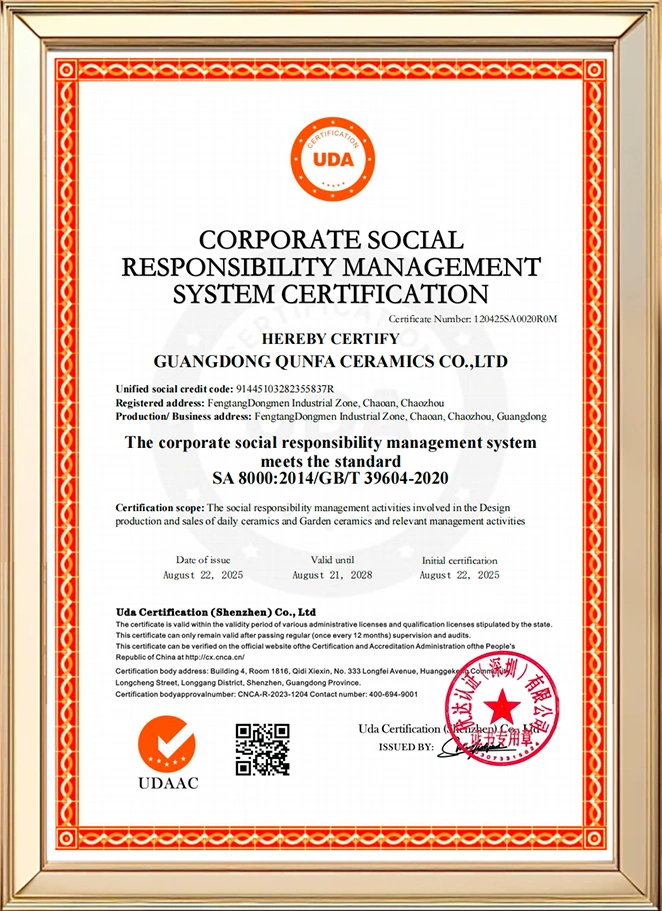
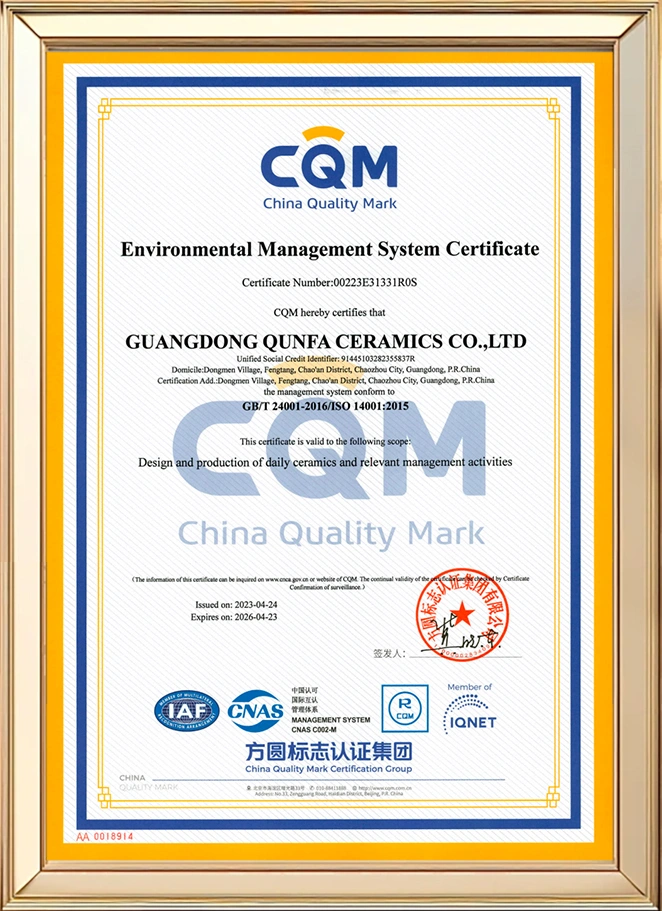
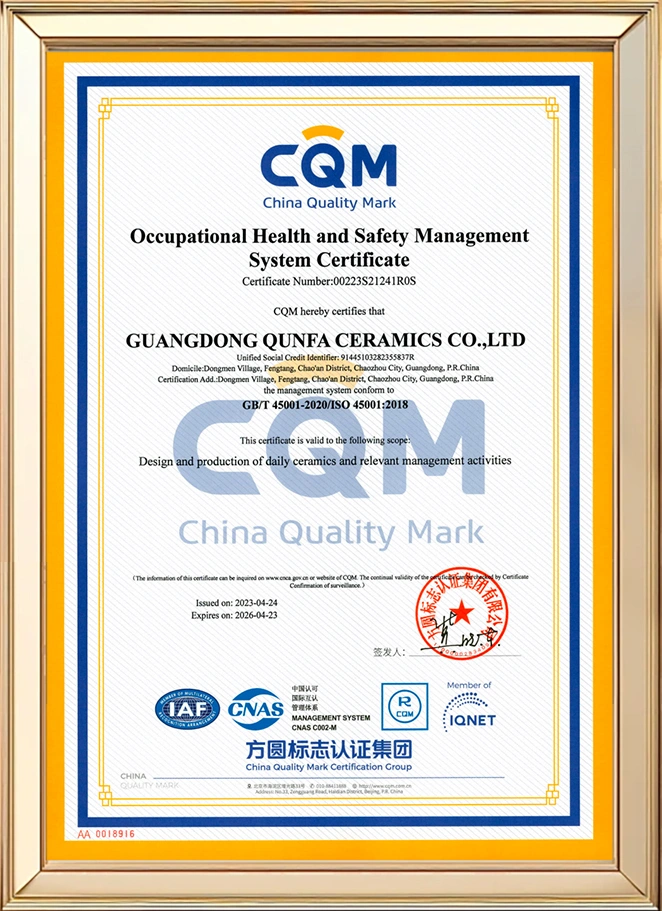
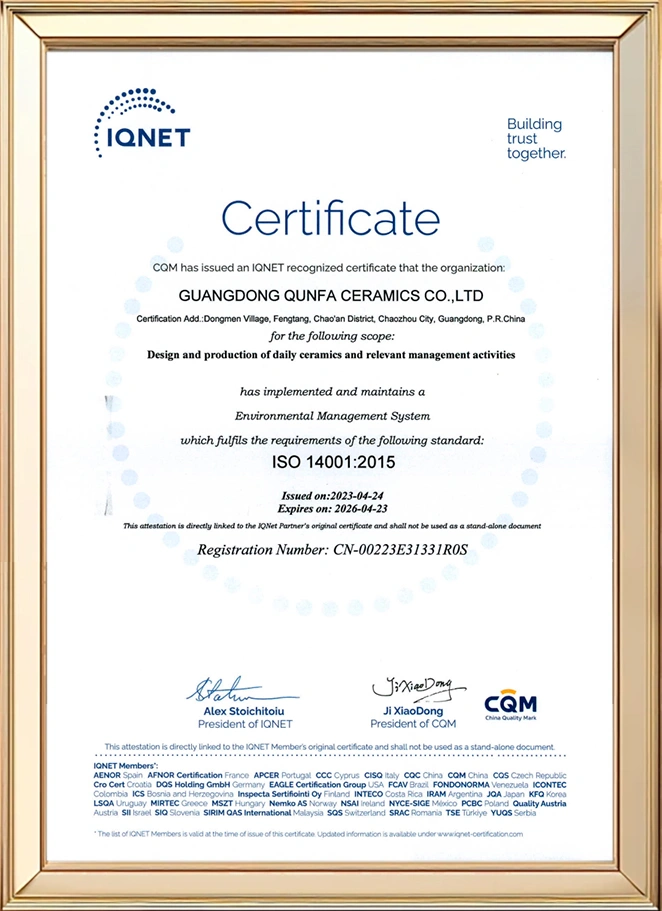
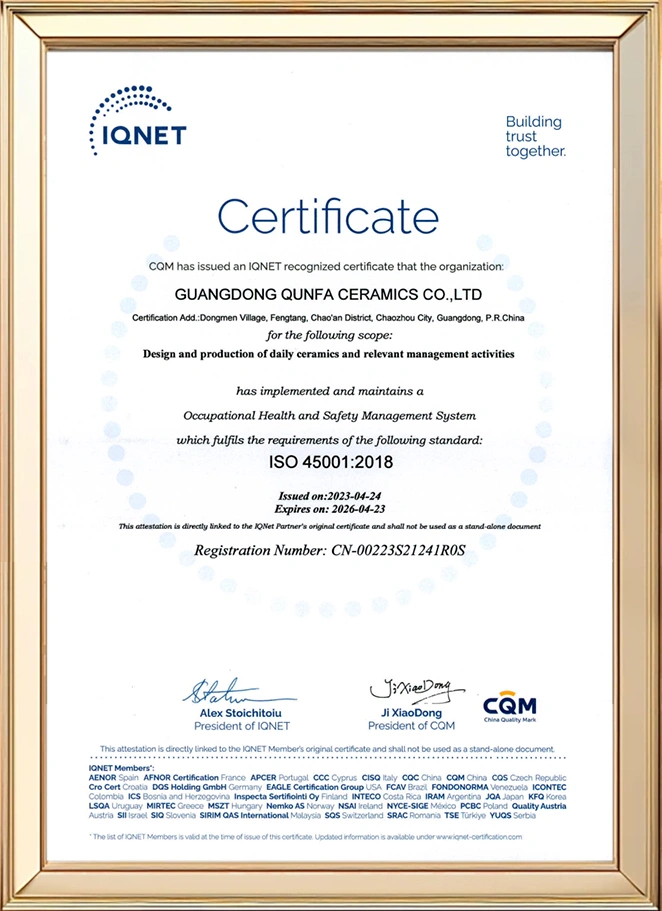
- Zertifizierungen (je mehr, desto zuverlässiger)
Hochwertige Keramikhersteller verfügen in der Regel über die folgenden Zertifizierungen:
- ISO9001 Qualitätsmanagement-System
- ISO14001 Umweltmanagementsystem
- BSCI / Sedex Audit der sozialen Verantwortung
- FDA / LFGB / Prop 65 Lebensmittelsicherheitsstandards (erforderlich für Geschirr)
- CE / UKCA EU-Normen
- SGS / Intertek Prüfberichte
Diese Zertifizierungen stehen nicht nur für die Stärke des Unternehmens, sondern haben auch einen direkten Einfluss darauf, ob Ihre Produkte auf dem lokalen Markt erfolgreich verkauft werden können.
- Umfassende Erfahrung im Export
Ausgezeichnete Keramikunternehmen haben in der Regel einen stabilen Kundenstamm in Übersee:
- Haben sie Erfahrung in der Zusammenarbeit mit großen Einzelhändlern in Europa und Amerika?
- Sind sie mit den Vorschriften in Europa, im Nahen Osten, in Südostasien und in den Vereinigten Staaten vertraut?
- Können sie einschlägige Fallstudien vorlegen?
Je umfangreicher die Exporterfahrung ist, desto besser kann das Unternehmen Qualitäts- und Handelsrisiken abfedern.
III. Bewertung der Produktionskapazität: Der Schlüssel zu einer stabilen Keramik-Lieferkette
Die Herstellung von Keramik umfasst mehrere Prozesse, darunter Rohstoffe, Formgebung, Biskuitbrand, Glasur, Glasurbrand und Verpackung. Instabilitäten in einer dieser Phasen können die Lieferzeit und die Qualität beeinträchtigen.
Zu den Bewertungsdimensionen gehören:
- Produktionskapazität
- Wie viele Produktionslinien gibt es?
- Wie hoch sind die monatlichen und jährlichen Ergebnisse?
- Ist das Unternehmen in der Lage, die Produktionskapazitäten während der Hochsaison zu koordinieren?
- Verfügt sie über automatisierte Anlagen (intelligente Brennöfen, Roboterarme, automatische Glasierlinien)?
- Stabile Versorgung mit Rohstoffen
- Stammen der Ton, die Glasuren und die Pigmente aus einer legalen Lieferkette?
- Unterhält das Unternehmen langfristige Kooperationsbeziehungen zu den Lieferanten?
Die Materialstabilität bestimmt die Produktstabilität.
- Verfahren und Ausrüstung
- Verfügt das Unternehmen über Hochtemperaturöfen?
- Kann es Unterglasur-, In-Glasur- und Inkjet-Abziehbilder herstellen?
- Verfügt das Unternehmen über eine unabhängige Formenentwicklung?
Je komplexer und anspruchsvoller der Prozess eines keramischen Produkts ist, desto mehr Unterstützung benötigt es von einer Fabrik mit starken technischen Fähigkeiten.
Qualitätskontrolle: Der wichtigste Standard zur Beurteilung der Zuverlässigkeit von Fabriken
Die Zuverlässigkeit eines Keramikherstellers hängt von seinem Qualitätssicherungssystem ab.
Ausgezeichnete Keramikfabriken verfügen in der Regel über:
- Ein umfassendes System zur Qualitätskontrolle
- Prüfung des Rohmaterials (Wasseraufnahme, Plastizität, Reinheit)
- Überprüfung des Biskuitbrandes (Festigkeit, Risse)
- Kontrolle der Verglasung und der Abziehbilder (Gleichmäßigkeit, Farbunterschiede)
- Prüfung der fertigen Produkte (Ebenheit, Hitzebeständigkeit, Schwermetallmigration)
- Ein unabhängiges Team für Qualitätskontrollen
Ein unabhängiges und professionelles QC/QA-Team ist ein entscheidender Indikator für eine zuverlässige Fabrik.
- AQL-Prüfnormen
Käufer von Marken aus Übersee schätzen sie sehr:
- AQL 1.0 / 2.5 / 4.0
- Können Inspektionsberichte vorgelegt werden?
- Unterstützt die Fabrik die Inspektion durch Dritte (SGS / BV / ITS)?
Fabriken ohne Qualitätssicherungssystem haben Schwierigkeiten, eine stabile Versorgung zu gewährleisten.
Design und F&E-Fähigkeiten: Wichtige Überlegungen bei der Auswahl eines ODM/OEM-Herstellers
Auf dem Keramikmarkt herrscht ein harter Wettbewerb. Die Produktion allein ist nicht ausreichend. Die Fähigkeit, originelle Designs und trendige Produkte anzubieten, ist für die Käufer zu einem entscheidenden Indikator bei der Auswahl ihrer Partner geworden.
Zu den Bewertungspunkten gehören:
- Verfügt der Hersteller über ein unabhängiges Designteam?
- Können sie 3D-Modellierung und Formenentwicklung anbieten?
- Haben sie patentierte Produkte?
- Ist die Geschwindigkeit neuer Produktaktualisierungen schnell genug?
- Können sie auf der Grundlage der Markenpositionierung maßgeschneiderte Designs anbieten?
Für Markeninhaber und grenzüberschreitend tätige Verkäufer haben Keramikhersteller mit ODM-Fähigkeiten einen erheblichen Vorteil.
Dienstleistungskapazitäten und Einstellung zur Zusammenarbeit: Schlüsselfaktoren für langfristige Zusammenarbeit
Bei der Beschaffung geht es nicht nur um den billigsten Preis“, sondern darum, zu beurteilen, ob die andere Partei Ihr Unternehmenswachstum langfristig unterstützen kann.
Zu den Bewertungsmethoden gehören:
- Kommunikationseffizienz
- Können sie schnell auf E-Mails antworten?
- Können sie Ihre Bedürfnisse genau verstehen?
- Verfügen sie über professionelles Außenhandelspersonal?
- Stabilität der Lieferzeiten
- Können sie pünktlich liefern?
- Ist in der Hochsaison mit Verspätungen zu rechnen?
- After-Sales-Fähigkeit
- Kümmert sich der Hersteller aktiv um Qualitätsprobleme?
- Sind sie bereit, Liefer- oder Qualitätsvereinbarungen zu unterzeichnen?
Eine gute Keramikhersteller nicht nur “Produkte herstellt”, sondern auch das Vertrauen in die Partnerschaft stärkt.
Mustertests und Kleinserienbestellungen sind unverzichtbare Überprüfungsschritte
Unabhängig davon, wie gut die Behauptungen der Hersteller sind, sind Proben immer der zuverlässigste Indikator.
Vorgeschlagenes Verfahren:
- Fordern Sie Muster mit demselben Verfahren wie bei der Massenproduktion an.
- Führen Sie eine vollständige Bewertung der Proben durch: Farbunterschiede, Glasur, Gewicht, Ebenheit und Hitzebeständigkeitsprüfung.
- Überprüfen Sie die Stabilität mit Probebestellungen in kleinen Chargen.
- Führen Sie bei Bedarf Prüfungen durch Dritte durch (z. B. FDA, LFGB, Schwermetallprüfungen).
Wenn sowohl die Muster als auch die Probeaufträge Stabilität zeigen, ist die Fabrik zuverlässiger.
Warum ist die Chaozhou-Keramik die Aufmerksamkeit der Käufer wert?
Chaozhou ist einer der drei wichtigsten Standorte der chinesischen Keramikindustrie und zählt mit über tausend Keramikunternehmen zu den größten und reifsten der Welt. Keramik-Industrie-Cluster.
Die Vorteile der Wahl einer Keramikhersteller in Chaozhou umfassen:
- Eine vollständige industrielle Kette (Rohstoffe - Öfen - Design - Verpackung - Logistik - Service aus einer Hand)
- Eine Kombination aus Handwerkskunst und moderner Technologie, die eine stabile Qualität gewährleistet
- Eine Konzentration von Außenhandelsunternehmen, die mit internationalen Standards vertraut sind
- Eine hohe Dichte an Fabriken, die eine zentralisierte Inspektion und einen Vergleich ermöglicht
Für Einkäufer aus Übersee ist Chaozhou eine der Städte, in denen man am leichtesten zuverlässige Keramiklieferanten findet.
Chaozhou Ceramic Manufacturers Association: Eine Plattform für hochwertige Keramikfabriken aus einer Hand
Die Verband der Keramikhersteller in Chaozhou bringt zahlreiche starke Keramikproduktionsunternehmen in der Region Chaozhou zusammen, darunter:
- Hersteller von Keramik für den täglichen Gebrauch
- Lieferanten von Hotelgeschirr
- Kunst- und Geschenkkeramikfabriken
- Hersteller von Sanitärkeramik und Badkeramik
- Ingenieur- und Baukeramikunternehmen
Die Mitglieder der Vereinigung verfügen in der Regel über:
- Vollständige Produktionssysteme
- Umfassende Erfahrung im Außenhandel
- Strenge Normen für die Qualitätskontrolle
- Stabile Produktionskapazität
- OEM/ODM-Dienstleistungen
Der Verband hat es sich zur Aufgabe gemacht, Einkäufern aus aller Welt dabei zu helfen, mit den am besten geeigneten Keramikherstellern in Kontakt zu treten und diese zu beliefern:
- Werksscreening und Empfehlung
- Empfang der Fabrikbesichtigung
- Anleitung zur Qualitätszertifizierung
- Unterstützung der Unternehmenskommunikation
- Internationale Ausstellung Matchmaking
- Informationsaustausch in der Industrie
Wenn Sie auf der Suche nach zuverlässige chinesische Keramikhersteller oder OEM/ODM-Fabriken, die für eine langfristige Zusammenarbeit geeignet sind, die Verband der Keramikhersteller in Chaozhou kann Ihnen helfen, viel Zeit bei der Überprüfung zu sparen und die Risiken der Zusammenarbeit erheblich zu verringern.